Strata Fire Safety NSW: What Changed on 13 February 2026
NSW AFSS Changes 2026
What Is Australian Standard AS 1851-2012?
AS 1851-2012 is the most recent Australian Standard for the routine service of fire protection systems and equipment. It serves as a detailed instruction manual for competent personnel, specifying how often each fire safety measure should be inspected and the exact steps to undertake during each inspection.
The standard covers a wide range of essential fire safety equipment including smoke alarms, fire hydrants, sprinklers, pump sets, fire doors, hose reels, and fire detection systems. Previously, many fire protection companies used AS 1851-2012 as a guideline rather than a strict requirement. From 13 February 2026, it is law.
What’s Changed for Strata Fire Safety in NSW
All Class 1b and Class 2 to Class 9 buildings in NSW must now have essential fire safety measures inspected and tested in accordance with Australian Standard AS 1851-2012. This applies to both new and existing buildings.
Previously, following AS 1851-2012 was considered best practice. From 13 February 2026, it’s mandatory – bringing in more structured inspections, mandatory on-site logbooks, documented servicing procedures, and clearer contractor accountability.
For the full details of the reforms, you can read the official guidance from the NSW Building Commission: NSW Fire Safety Reforms — AS 1851-2012
What Your Owners Corporation Needs to Do
As the legal owner of common property, your Owners Corporation is responsible for ensuring your building meets its strata fire safety obligations in NSW. In practical terms, that means three things.
- Engaging qualified, accredited fire safety professionals to carry out inspections and testing. Maintenance must be conducted by competent persons, and all systems and equipment must remain operational at all times, with defects addressed promptly.
- Keeping records on site. Records must be kept in a prescribed format – including hardcopies of service records – for at least seven years, and made available for inspection by the Fire Commissioner or relevant council.
- Lodging your Annual Fire Safety Statement with council annually. This is a legal declaration confirming that all essential fire safety measures have been maintained to the required standard.
What Fire Safety Measures Are Covered?
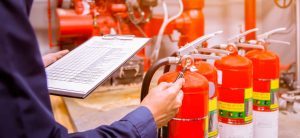
The legislation applies to essential fire safety measures listed in your building’s Fire Safety Schedule. These typically include fire sprinkler systems, hydrants, hose reels, fire doors, smoke detection systems, and emergency warning systems. Each measure has specific inspection and testing intervals under AS 1851-2012 — some required monthly, others annually, and some every five, ten, or twenty-five years. Longer interval services should be planned for within your Capital Works Fund.
Do You Need to Upgrade Your Systems?
No. There is no requirement to upgrade existing systems, provided they are properly maintained under your Fire Safety Schedule. The legislation is about how maintenance is carried out and recorded – not about replacing equipment.
What About Older Buildings in NSW?
Building owners of older buildings are not expected to complete all long-duration service intervals from the outset. Service intervals start from 13 February 2026, so the first annual service is expected to be completed by February 2027.
If your building has incomplete records or documentation gaps, this is common and can be addressed in an orderly way. Your strata manager can help identify what’s missing and make sure you’re set up correctly going forward.
Penalties for Non-Compliance
Penalty infringement notices can escalate from $500 in week one to $3,000–$4,000 per week beyond week four. There are also insurance implications — claims may be declined if fire safety systems were not properly maintained, and policies may be cancelled or renewal refused for buildings with unresolved defects.
TSM Is Across This
Your strata manager does not carry out or certify inspections – that’s the role of your fire safety contractor. But we coordinate the process on behalf of your Owners Corporation, making sure the right people are engaged, inspections are tracked, and your building stays on top of its strata fire safety obligations in NSW.
If you have questions about how these changes apply to your building, get in touch with your TSM strata manager directly. Learn more about how TSM manages strata compliance for buildings across NSW.